
By Giulia Ralph, BHSc (Nutrition), GradCert Human Nutrition, ASCA Level 1 Strength & Conditioning Coach
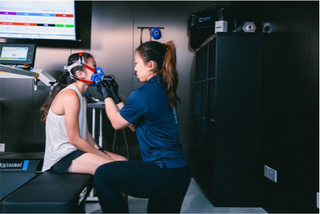
Results produced by Forged by Reformd, featuring Singapore national duathlete, Bernice Tan.

VO₂ max, or maximal oxygen uptake, is a measure of aerobic capacity that represents the maximum amount of oxygen the body can utilise during exercise (1). It is widely considered one of the most valid and reliable indicators of cardiorespiratory fitness (2).
Traditionally, VO₂ max testing has been used for athletes to assess fitness levels, monitor training adaptations, and guide performance improvements (1, 2). More recently, wearable fitness devices have made VO₂ max estimates increasingly accessible, allowing recreational athletes and fitness enthusiasts to track changes in their aerobic capacity over time. Alongside the growing popularity of racing events such as Hyrox and the continued rise in running culture, demand for laboratory-based fitness testing has also increased, making these assessments available to a much broader population beyond elite athletes (1).
To explore the potential influence of hydration status on physical performance, two treadmill-based VO₂ max assessments were completed by the same athlete six days apart. Before the first test, the athlete consumed water only. Before the second, they pre-loaded with Realm electrolytes the night before and again on the morning of testing.
This case study compares the results of both assessments and explores how hydration status may influence physiological performance during high-intensity exercise and perceived exertion. As a single-athlete observation, the findings cannot establish a causal relationship between the hydration strategy and the outcomes. However, they provide an opportunity to discuss the importance of hydration in physical performance and output alongside the current body of research.
Prior to the second VO₂ max assessment, the athlete pre-loaded the night before the test with 1 sachet of Realm Pineapple Coconut Hydration Mix and took 1 sachet prior to the VO2 max test.

Understanding Lactate Threshold
Before looking at the VO₂ max results, it's helpful to understand lactate threshold and why it's important for exercise performance. Throughout this article, you'll see the terms LT1 (First Lactate Threshold) and LT2 (Second Lactate Threshold), which refer to key points reached during the treadmill test.
The lactate threshold is the point during exercise when lactate begins building up in the blood faster than your body can remove it (1,2). At lower exercise intensities, your muscles produce energy efficiently using oxygen, making the effort feel more manageable. As the intensity increases, your body has to work harder to meet the demand for energy, causing lactate to build up more quickly. This is when exercise starts to feel significantly more challenging, fatigue develops faster, and it becomes harder to maintain the same pace or intensity (1,2).
In general, lactate threshold typically occurs at approximately 60% of VO₂ max in untrained individuals, 65–80% in recreational athletes, and 85–95% in elite athletes. Like many aspects of performance, lactate threshold can improve with appropriate training (2,3,4).
|
Typical lactate threshold values, expressed as % of VO2max: |
|
|
Untrained/average person: |
~60% of VO2max |
|
Recreational athlete: |
~65–80% of VO2max |
|
Elite endurance athlete: |
~85–95% of VO2max |
In this case study, the athlete's lactate threshold occurred at 87% of VO₂ max during the water-only test and 98% during the water-plus-electrolyte test.
While this difference is noteworthy, it should still be interpreted with caution. However, these findings are consistent with the broader body of literature highlighting the importance of adequate hydration for physical performance.

Why Hydration Matters for Physical Performance
Hydration plays an important role in physical exertion. Research has shown that fluid losses equivalent to approximately 3% of body mass can reduce maximal aerobic power by around 5%, even in cool environmental conditions (5,6). One proposed mechanism of this is a reduction in plasma volume, which increases cardiovascular strain and reduces the body's ability to deliver oxygen efficiently during exercise (7).
Dehydration has also been shown to increase ratings of perceived exertion. A systematic review and meta-analysis reported that perceived exertion increased by approximately 0.21 points for every 1% increase in body mass lost through dehydration, with the effect becoming more pronounced beyond 2-3% dehydration. This is particularly relevant when interpreting the perceived exertion data presented later in this case study (7).
Why Electrolytes Matter
Water alone isn't always enough to maintain optimal hydration status, particularly during prolonged or intense exercise. Electrolytes, including sodium, potassium, and magnesium, play a central role in fluid balance, nerve signaling, and muscle contraction (8).
Sodium is the primary electrolyte lost in sweat and plays a key role in maintaining plasma volume (the fluid component of blood that supports cardiovascular function and oxygen delivery during exercise). Adequate sodium intake alongside fluid helps the body retain water more effectively than water alone. This may help offset the reduction in plasma volume associated with dehydration described earlier (8).
Potassium supports fluid balance within cells and plays a role in muscle contraction, while magnesium contributes to energy production and neuromuscular function. Both of these are lost through sweat, and their depletion has been associated with impaired muscle function and increased fatigue during prolonged exercise (8).
The amount of electrolyte replacement needed depends on factors such as exercise duration, intensity, environmental conditions, and individual sweat rates. For many shorter or lower-intensity sessions, water alone may be sufficient (9). However, during prolonged or intense exercise, replacing both fluids and electrolytes may help maintain hydration status and better support performance (10).
In this particular case study, the second VO₂ max assessment involved electrolytes as a pre-loading strategy. While we cannot state that this alone directly caused the improved VO2 max, it provides an opportunity to explore how specific hydration strategies may influence not only physical output but also perceived exertion. Further, this aligns with broader research on hydration strategies (including electrolyte intake where appropriate) which has been shown to extend time to exhaustion and support endurance capacity - a pattern more consistently linked to delaying fatigue and lowering perceived effort than to directly raising VO2 max. This distinction is relevant when interpreting the results of this case study, in which the more defensible finding was the reduction in perceived exertion rather than the shift in VO2 max itself.
Methodology
Test 1 was conducted on 6 May 2026 at 11:00 am, using water only prior to testing. Test 2 was conducted six days later, on 12 May 2026 at 11:16 am, after consuming Realm the night before and again on the day of the test. Both tests were conducted at Forged by RF, CityLink, using the same incremental treadmill protocol and reaching a final stage of 16.0lm/h.
Results
Test 1 — Water Only


Test 2 — Water + Realm:

 Key Findings
The most notable observation from the two assessments was the reduction in perceived exertion. At LT1, RPE decreased from 7.0 to 4.1, while RPE at lactate threshold fell from 10.3 to 8.4. Despite reporting lower perceived effort, the athlete reached a higher relative intensity before reaching lactate threshold during the second assessment. These findings align with published research demonstrating that dehydration increases perceived exertion during endurance exercise.
Limitations
As a single-athlete case study, these findings should be interpreted with caution and cannot establish causation. The six-day interval between tests, different technicians, and the subjective nature of perceived exertion (RPE) may have influenced the results, despite the use of the same testing protocol.
Conclusion:
After pre-loading with Realm, the athlete recorded a higher VO₂ max value in this second test. Because this was a single-athlete field observation, we cannot attribute the change solely to Realm. What we can say is that hydration status is a meaningful variable in performance testing—and one athletes should take seriously. While further controlled research is needed, this case study reinforces the importance of arriving well hydrated before endurance events or physiological testing to help ensure performance is assessed under optimal conditions.

Key Takeaway:
When preparing for a race, physical testing, or event, aim to maintain regular fluid intake in the days leading up to the event. Include electrolytes where appropriate, especially during longer sessions and in anticipated warm or humid conditions. Electrolyte replenishment and loading may also be particularly useful if you have a high sweat rate. Avoid drinking large amounts of water too close to the event; instead, focus on evenly distributing intake. Treat hydration strategies as a key part of training, and incorporate them as much as you consider them a performance enhancer or hindrance. Avoid trying new strategies or changing your approach on the day of the event. Trial fluids and electrolytes in the weeks leading up to the event, allowing for plenty of time to train the gut appropriately. Consider the expected event conditions, duration, and most importantly, pay attention to how your body responds throughout training. Having a plan that has been trialed, tested and honed in with enough time before the event, will place you in the best possible position to perform at your peak.
References
1. Assessment of Maximal Oxygen Uptake (VO2 Max) in Athletes and Nonathletes Assessed in Sports Physiology Laboratory (2024). https://pmc.ncbi.nlm.nih.gov/articles/PMC11197041/
2. Lactate Threshold. Physiopedia. https://www.physio-pedia.com/Lactate_Threshold
3. Casado A, Foster C, Bakken M, Tjelta LI. Does Lactate-Guided Threshold Interval Training within a High-Volume Low-Intensity Approach Represent the "Next Step" in the Evolution of Distance Running Training? (2023). https://pmc.ncbi.nlm.nih.gov/articles/PMC10000870/
4. Progress Update and Challenges on VO2max Testing and Interpretation (2020). https://pmc.ncbi.nlm.nih.gov/articles/PMC7494971/
5. Effect of Hydration State on Heart Rate-Based Estimates of VO2max. https://www.researchgate.net/publication/286726661_Effect_of_hydration_state_on_heart_rate-based_estimates_of_VO_2max
6. Dehydration and its effects on performance (fluid loss / VO2max relationship). https://us.humankinetics.com/blogs/excerpt/dehydration-and-its-effects-on-performance
7. Impact of Dehydration on Perceived Exertion During Endurance Exercise: A Systematic Review with Meta-Analysis. https://pmc.ncbi.nlm.nih.gov/articles/PMC9093000/
8. Effects of Electrolyte Supplements on Body Water Homeostasis and Exercise Performance during Exhaustive Exercise. https://www.mdpi.com/2076-3417/11/19/9093
9. Carbohydrate and Electrolyte Supplementation Strategies to Enhance Sports Performance: A Systematic Review and Meta-Analysis (2025). https://www.mdpi.com/2076-3417/16/6/2967
10. Sports and Hydration for Athletes: Q&A with a Dietitian. Johns Hopkins Medicine. https://www.hopkinsmedicine.org/health/expert-qa/sports-and-hydration-for-athletes